University of Potsdam, IBB, Human Biology, 14469 Potsdam, Germany
Lawrence M.Schell
Department of Anthropology, Department of Epidemiology and Biostatistics, University at Albany, State University of New York, Albany, NY USA
AleksandraGomuła
Department of Anthropology, Ludwik Hirszfeld Institute of Immunology and Experimental Therapy, Polish Academy of Sciences, Wrocław, Poland
Natalia Szczepanska
Department of Anthropology, Ludwik Hirszfeld Institute of Immunology and Experimental Therapy, Polish Academy of Sciences, Wrocław, Poland
SławomirKozieł
Department of Anthropology, Ludwik Hirszfeld Institute of Immunology and Experimental Therapy, Polish Academy of Sciences, Wrocław, Poland
Abhijeet SinghDewari
Laboratory of Kinanthropometry, Ergonomics and Physiological Anthropology, Department of Anthropology, University of Delhi, Delhi 110007, India
BarryBogin
School of Sport, Exercise & Health Sciences, Loughborough University, Loughborough LE113TU, United Kingdom
Başak KocaÖzer
Ankara University, Faculty of Languages, History and Geography, Department of Anthropology, 06100 Ankara, Türkiye
İsmailÖzer
Ankara University, Faculty of Languages, History and Geography, Department of Anthropology, 06100 Ankara, Türkiye
Ayşegül ÖzdemirBaşaran
Hatay Mustafa Kemal University, Faculty of Arts and Sciences, Department of Anthropology, Hatay, Türkiye
Sylvia Kirchengast
University of Vienna, Department of Evolutionary Anthropology, Djerassiplatz 1, 1030 Vienna, Austria
DetlefGroth
University of Potsdam, IBB, Biostatistics, 14476 Potsdam-Golm, Germany
Sylvia Bartkowiak
Poznań University of Physical Education, Department of Theory of Sports, Poznań, Greater Poland, Poland
Jan Konarski
Poznań University of Physical Education, Department of Theory of Sports, Poznań, Greater Poland, Poland
JaniSöderhäll
PC PAL, 91570 Bièvres, France
ChrisJefferies
PC PAL, Worcester, United Kingdom
SimonaSulis
Department of Anthropology, Faculty of Natural Sciences, Comenius University in Bratislava, Bratislava, Slovakia
ElenaGodina
Research Institute and Museum of Anthropology, Lomonosov Moscow State University, Moscow, Russia
JaninaTutkuviene
Department of Anatomy, Histology and Anthropology, Faculty of Medicine, Vilnius University, M.K. Ciurlionio str. 21, LT-03101, Vilnius, Lithuania
PiotrFedurek
Department of Anthropology, Ludwik Hirszfeld Institute of Immunology and Experimental Therapy, Polish Academy of Sciences, Wrocław, Poland
Thomas Schulze
Eir/Genix and FundaMental Pharma GmbH, Heidelberg, Germany
AnnaApanasewicz-Grzegorczyk
Department of Anthropology, Ludwik Hirszfeld Institute of Immunology and Experimental Therapy, Polish Academy of Sciences, Wrocław, Poland
ChipoMalambo
Department of Social Sciences Foundation in Kinanthropology, Faculty of Physical Education and Sport, Charles University, José Martího 269/31, 162 52, Prague, Czech Republic
PavlínaHušková
Faculty of Physical Education and Sport (FTVS), Charles University, Prague, Czech Republic
JáchymŠimsa
Department of Military Physical Education, Faculty of Physical Education and Sport, Charles University, José Martího 269/31, Prague 6, 162 52, Czech Republic
Department of Social Sciences Foundation in Kinanthropology, Faculty of Physical Education and Sport, Charles University, José Martího 269/31, 162 52, Prague, Czech Republic
MarkétaBuřilová
Department of Social Sciences Foundation in Kinanthropology, Faculty of Physical Education and Sport, Charles University, José Martího 269/31, 162 52, Prague, Czech Republic
KláraJahodová
Department of Social Sciences Foundation in Kinanthropology, Faculty of Physical Education and Sport, Charles University, José Martího 269/31, 162 52, Prague, Czech Republic
Martin Musalek
Department of Social Sciences Foundation in Kinanthropology, Faculty of Physical Education and Sport, Charles University, José Martího 269/31, 162 52, Prague, Czech Republic
Twenty-nine scientists met for the annual Auxological conference, held in Horoměřice near Prague, Czech Republic, and discussed aspects of environment and politics related to human growth using data from various European countries, India, and Sub-Saharan Africa. Exposures to Social, Economic, Political, and Emotional (SEPE) factors were associated with physical growth, health, and aging. Secular changes were associated with socio-economic gradients in conscripts, addressing political views, feelings of political liberation, and illusions of equity and freedom. New BMI charts were presented to better interpret BMI trends over time, and new blood pressure charts. The need for context-specific national screening standards was discussed. Mating preferences were examined in light of cultural ecology and personal ideology, and changes in birth weight and the sex ratio were examined in relation to socio-economic factors, political events, and COVID-19, as well as studies on cognitive and motor functions in preschool children, the influence of fine motor skills, visual attention, and visuomotor coordination on school readiness. Aspects of maturation in adolescent field hockey players were addressed, and obesity and health risks among Czech Artillery soldiers. The influence of alcohol and tobacco use on bone quality was discussed in view of physical activity and body composition, and statistical improvements to visualize causality in association chains to better understand the multiple interactions within biological networks. The meeting also addressed an evolutionary perspective on human pelvic size, work on body height in late Geometric-Roman and Medieval populations, aspects of biotechnology in conjunction with AI.
Keywords: political influences on height, strategic growth, SEPE factors, culture
Conflict of interest statement: There are no conflicts of interest.
Citation: Hermanussen, M. et al. (2026). Growth and Politics – Proceedings of the 33rd Aschauer Soirée held in Horoměřice near Prague, November 22nd, 2025. Human Biology and Public Health. https://doi.org/10.52905/hbph2026.133.
Permissions: The copyright remains with the authors. Copyright year 2026. Unless otherwise indicated, this work is licensed under a Creative Commons License Attribution 4.0 International. This does not apply to quoted content and works based on other permissions.
The meeting was kindly supported by the Auxological Society and the Faculty of Physical Education and Sport, Charles University, Prague, Czech Republic.
Twenty-nine scientists met for the annual Auxological conference (last year Hermanussen et al. 2025b) held in Horoměřice near Prague, to discuss the various aspects of environment and politics on human growth. The meeting started with the contribution of Lawrence M. Schell, who presented the concept of the exposome, i.e., “the measure of all the exposures of an individual in a lifetime and how those exposures relate to health” (Wan et al. 2025). The subject of age at menarche is commonplace among auxologists and is now more prominent in the public health literature than ever before. The reason is that age at menarche is considered a critical endpoint for understanding the effects of environmental chemicals on human development. However, as maturation is eco-sensitive, there are numerous influences to disentangle in order to isolate the influence of primary interest. The concept of the exposome acknowledges the multiplicity of influences. Concern about disentangling multiple effects applies to the study of any environmental influence of interest. How do we approach the isolation of one effect in a world where there are multiple influences? Schell examined from an epistemological perspective the scientific approach to effect isolation in respect to changes in age at menarche. Concluding that new mechanisms of effects on growth and maturation operate requires eliminating alternative explanations, of which there are many, according to the exposome concept.
Başak Koca Özer, Ayşegül Özdemir Basaran and İsmail Özer presented a comparative analysis of body height in late Geometric-Roman and Medieval period Anatolian subadult populations (age 1–12yrs.). The study integrated osteological data from four chronologically diverse Anatolian juvenile populations — Börükçü (n=120) (late Geometric-Roman, Aegean), Dilkaya (n=90) and Van Kalesi (n=71) (Medieval, East Anatolia), and Havuzdere (n=87) (Medieval and later period, Marmara) — to explore regional disparities in stature and health. Stature was estimated using Ruff’s regression equations (Ruff et al. 2012) based on femoral and tibial diaphyseal lengths, and crural indices were calculated to assess limb proportionality. Across the combined sample, stature estimates ranged from 54cm to 162cm. The East Anatolian Medieval populations generally demonstrated superior growth patterns. Children from Van Kalesi exhibited a higher mean stature at age 5 than their Aegean and Marmara contemporaries. Dilkaya juveniles consistently showed greater stature across most age groups, with statistically significant differences (p is less than 0.05) observed at ages 8 and 12. Both Van Kalesi and Dilkaya, situated in resource-rich Medieval areas known for animal husbandry and trade, displayed higher crural indices and more proportional limb development, indicative of greater access to nutrients. In contrast, Havuzdere individuals (Medieval and Later Period) presented lower mean stature and reduced crural indices, suggesting chronic nutritional stress and stunted growth. The socio-economically disadvantaged and isolated Havuzdere community provides strong evidence of environmental and dietary constraints following the Ottoman conquest. The Börükçü population (Late Geometric-Roman) exhibited the shortest overall mean statures, ranging narrowly from 70 to 137cm between ages 1 and 12. This group also faced a critically high infant and child mortality rate of 29.63%, one of the highest among ancient Anatolian groups. Although survival exceeded that of some contemporary communities, high mortality risks persisted due to environmental stress and infectious diseases. These findings underscore the substantial impact of socio-economic and ecological factors on childhood physical development across different periods of Anatolian history, revealing marked regional disparities driven by differences in ecological productivity, dietary diversity, and social structure. Integrating data from multiple skeletal populations offers a broader understanding of the biocultural determinants of health, resilience, and adaptation.
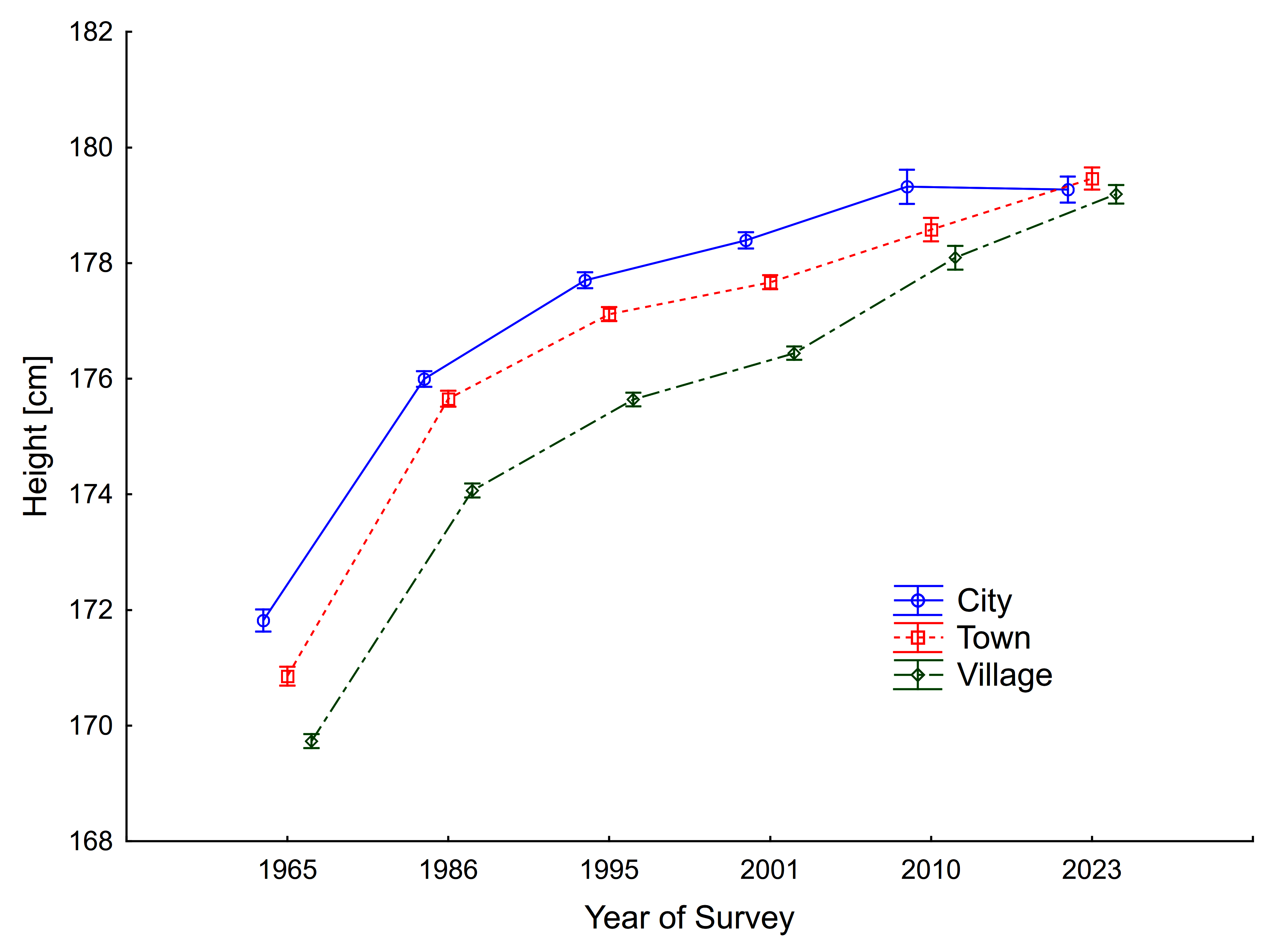
Aleksandra Gomuła, Natalia Nowak-Szczepańska, and Sławomir Kozieł assessed secular changes in height and BMI, as well as socio-economic gradients, among Polish male conscripts examined between 1965 and 2023 (Figure 1). Data were collected during medical examinations for military service eligibility in 1965, 1986, 1995, 2001, 2010, and 2023. Every 10th conscript was included in the study. The total sample consisted of nearly 138,000 individuals. Body height, weight, and socio-economic data were recorded. A two-way ANOVA was conducted with cohort and social factors as independent variables to assess the differences in height and BMI. Mean height increased from 170.49cm in 1965 to 179.28cm in 2023, with the fastest growth observed between 1965 and 1986 and the slowest between 2010 and 2023. Mean BMI increased from 21.73 to 23.86kg/m², peaking between 2001 and 2010, and slightly declining between 1986 and 1995. Urban–rural differences in height persisted until 2010, with taller men in urban and shorter in rural areas, but disappeared by 2023. Urbanization-related patterns in BMI fluctuated over time, reflecting broader socio-economic changes, and in 2023 BMI was significantly higher in villages compared to cities.
Figure 1 Secular changes in height of urban and rural Polish conscripts examined between 1965 and 2023
Maternal education consistently predicted height, with sons of better-educated mothers being taller. For BMI, higher maternal education was associated with higher BMI until 2010, but by 2023 this pattern reversed. The authors concluded that Polish conscripts became markedly taller and heavier, though the height increase has slowed in recent years. The reversal of the socio-economic gradient in BMI suggests that Poland exhibits patterns typical of developed countries. The remaining height differences by maternal education suggest that lower-SES groups may not have yet fully realized their growth potential.
Barry Bogin and Abhijeet Singh Dewari reported on the influence of Social-Economic-Political-Emotional (SEPE) factors on the physical performance and health of older people across India. SEPE factors are associated with human physical growth and development from conception to maturity (Bogin 2021). The impact of SEPE factors on the physical performance and health of older people is less well-understood. Bogin and Dewari searched for SEPE associations in the Longitudinal Aging Study in India (LASI). LASI is a multidisciplinary, internationally harmonized panel study of 73,396 older adults aged 45 and above, as well as their spouses if less than 45 years old, representative of India and all of its states and union territories. LASI is designed to provide researchers and policymakers with comprehensive data on the health characteristics of India’s older population and on factors associated with healthy aging. The researchers extracted from the LASI data set physical performance data (e.g., hand grip strength, gait speed, balance), health data (height, weight, waist and hip circumference), and 31 SEPE variables related to overall well-being, satisfaction with life, and religious/spiritual practice. The researchers applied St Nicholas House Analysis (SNHA) - a statistical method that calculates ranked correlations (from most to least correlated) and produces a network graph for the visualization of these associations (Hermanussen et al. 2021). Results indicated that the network of variables may be ordered into 4 groups that converge onto 1 central variable - Social Ladder Position (SLP). SLP is the participant’s belief of where she/he stands in society, from lowest to highest rank. The most direct connections to SLP are the variables related to life satisfaction, years of schooling, practicing yoga/meditation/asana, relative health index, body weight, food security, self-reported health, and the importance of religion. These variables were also associated with height, grip strength, balance test, timed walk, and amount of physical activity. The importance of SLP as the mediator of all these other variables suggests that subjective feelings about one's status, wealth, education, and job prestige strongly influence health and physical performance at older ages.
Michael Hermanussen and Christiane Scheffler discussed the secular trend in body height in German conscripts since 1885, and presented evidence of strong effects of the social community on these trends (Hermanussen et al. 2025a; Scheffler et al. 2025). The height of more than 14 million men of the German Armed Forces born 1865-1975 was correlated with economic prosperity, nutrition and health, and income inequality and household wealth share. The most substantial height increases occurred during periods of political upheaval and the loss of state authority. The non-linear pattern of secular height increments in Germany since the late 19th century suggested that political liberation, hope for a better life, and illusions of equity, freedom, and justice, as well as the expectation of social advancement (Scheffler and Hermanussen 2025) entail competitive growth, strategic growth adjustments, and, finally, long-term, substantial secular trends in height. Socio-political effects largely outweigh the effects of individual living conditions.
Sławomir Kozieł discussed the recent decrease in human pelvic size from an evolutionary perspective. This “obstetrics dilemma” resulted in the evolution of hominins from a narrow pelvis needed for erect bipedalism to a wider birth canal required to deliver large-headed neonates. Pelvis’ size was maintained by balancing selection. Since the 1800s, assisted delivery methods for neonates have gradually improved and spread widely. At the same time, the total fertility decreased from the traditional 6-7 births per woman to 1.32-1.79. These changes, which affected the mutation-selection balance, relaxed natural selection for a large pelvis. The maximum pelvic widths of 37,930 adults born between 1880 and 1980 in Australia, Poland, and Mexico decreased by ~45 mm per century, while statures increased by ~100 mm. Since the pelvic dimensions are heritable, the observed changes are a clear evolutionary trend in human anatomy.
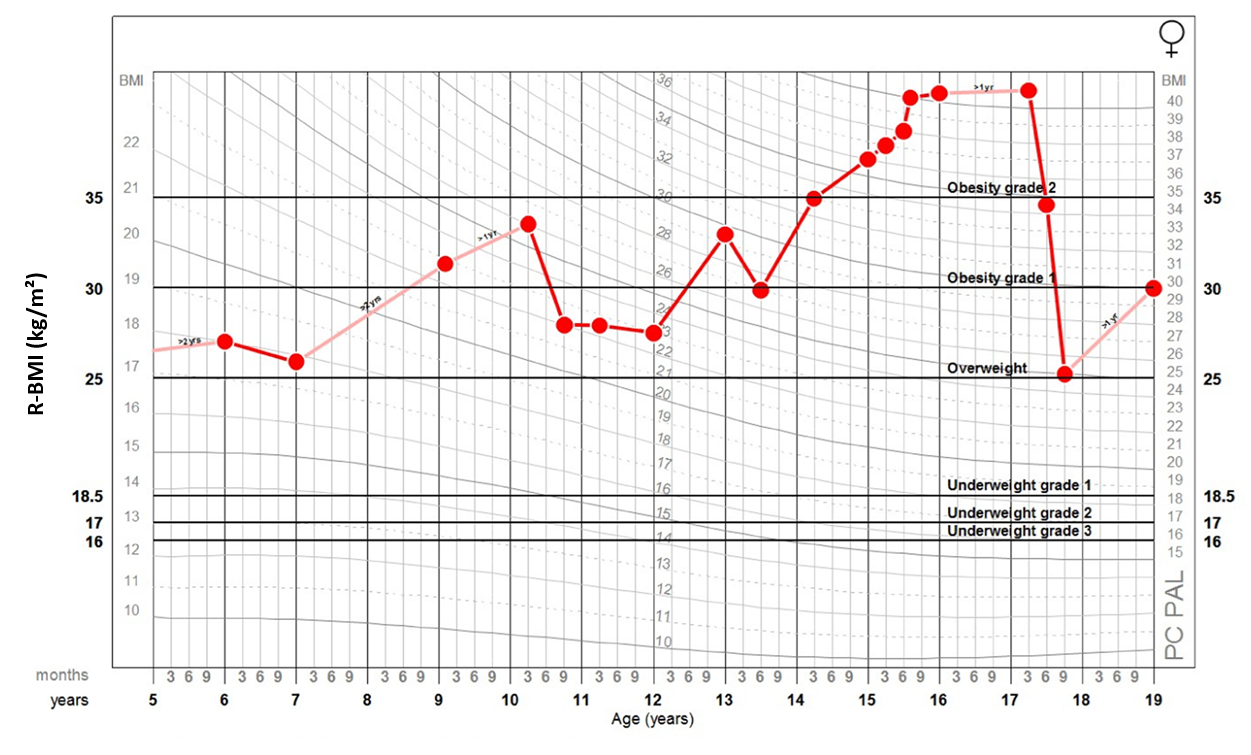
Jani Söderhäll presented the new R-BMI Growth Charts for Children with Severe Obesity (Figure 2). The number of children with severe obesity is increasing world-wide, yet most growth charts were not designed to track children with extremely high BMI. Data for obese children plotted well outside the normal ranges are difficult to interpret and can pose challenges for both researchers and clinicians as the centile curves drawn using the LMS method tend to balloon at higher levels (Engsner et al. 2025). In this case the data from the World Health Organization (WHO) was used to draw the new chart, and to avoid the ballooning effect, the author added a fix value for each additional SD level above 3. The R-BMI growth chart offers the possibility to track children from birth, through childhood, and adolescence with a smooth transition to the adult BMI obesity cut-off limits of 25kg/m², 30kg/m², 35kg/m² etc. Using the common adult levels as a reference “R”, the degree of obesity can be described in children and adolescents of all ages. The new BMI chart allows for better interpretation of the R-BMI trend over time. In addition, this chart also allows manual estimation, and plotting, of R-BMI from the child’s BMI values, and could thus be used be also without a computer.
Figure 2 Sample R-BMI chart showing BMI values of a girl from the age of 5 up to 19 years. The R-BMI chart displays values in relation to established adult BMI overweight and underweight values and can facilitate understanding of the degree of obesity or starving. The horizontal chart design allows for enhanced interpretation of BMI trends, whether positive or negative
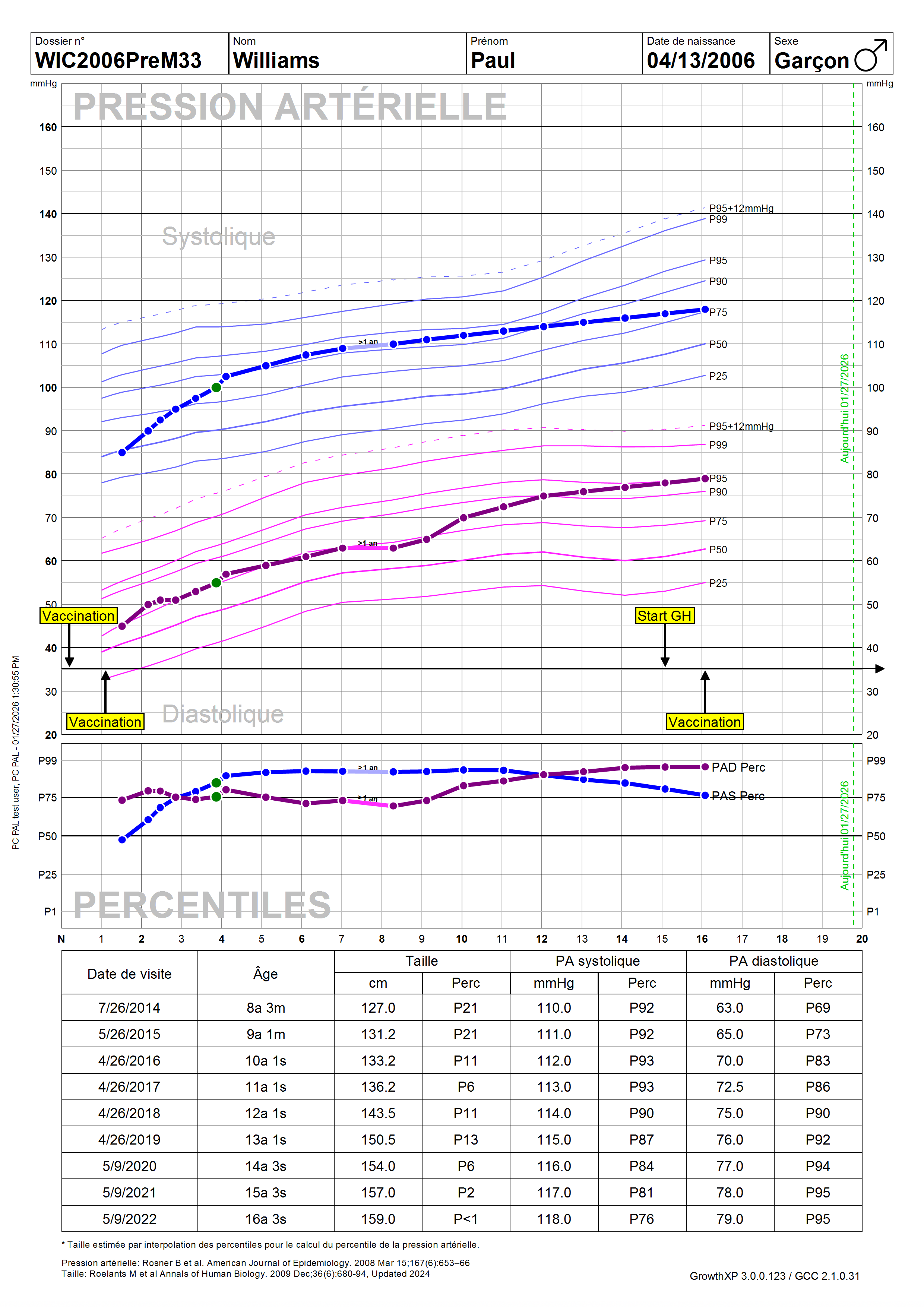
Chris Jefferies presented an age, sex, and height-dependent blood pressure (BP) chart. Many growth references and standards familiar to clinicians use age-invariant parameters to define a population for comparison with patients. In 2017 the American Association of Pediatrics released clinical hypertension guidelines based on BP centiles dependent upon height, age, and sex (Flynn et al. 2017). Notably, height is an age-dependent quantity; therefore, to monitor BP over longer periods of time based on these guidelines, clinicians need to use lookup tables that provide reference values. Currently, there is no direct way to visualize how a child’s BP changes over time as they grow and age. To address the need, PC PAL has developed a digital BP chart based on US reference data that dynamically adjusts to both a patient’s age and height across multiple visits, analogous to the traditional growth charts clinicians use (Figure 3).
Figure 3 Image capture of a virtual patient on the newly developed digital blood pressure chart from GrowthXP application (Belgian Variant 2.0.1.31)
Simona Sulis showed that alcohol and tobacco use (Sulis et al. 2025; Sulis et al. 2026) influences bone quality, physical activity (PA), and body composition in 1001 Slovak men and women aged 18–30 years (mean age 22plus or minus2.35 years). Bone mineral density was measured using a quantitative ultrasound device (Sunlight MiniOmni™), which yielded z-score data. Body composition variables, including skeletal muscle mass (SMM; kg) and per cent body fat (PBF; %), were assessed using a bioimpedance analyzer (InBody 770). Additional behavioral factors, including alcohol consumption, smoking, and PA, were collected using the WHO STEPS 2014 questionnaire. In the regression analysis, duration of alcohol consumption (p is less than 0.001) and cigarettes smoked per week (p equals 0.042) were the only significant predictors of z-score (F(9.448)=2.609, p equals 0.006, R²=0.050), with smoking harming bone health, whereas alcohol had a positive impact. St Nicolas House Analysis (Hermanussen et al. 2021) confirmed the findings of the previous analysis concerning alcohol (r=0.19). Conversely, for smoking (r=0.23), it identified an inverse relationship, noting a positive effect on bone health, a finding likely mediated by the association with alcohol consumption. The authors concluded that lifestyle risk factors, including smoking and alcohol consumption, are associated with bone tissue quality in young adults; however, due to the inconsistent results, further studies are required.
Janina Tutkuviene and colleagues showed changes in birth weight (BW) and sex ratio at birth (SRB) over the past 30 years, with respect to socio-economic factors and political events, and COVID-19 in Lithuania. The authors studied Lithuanian Birth Register data for the period 1995–2023 (n=868,428), with particular attention to the regional recession of 1999–2001 and the global economic crisis of 2008, which became particularly evident in Lithuania a few years later, and the COVID-19 and post-pandemic period. Over the past three decades, minima and maxima of BW fluctuated more in boys (3583–3634g) than in girls (3423–3489g). During the economic crises, the decrease in BW was small, but significant (p is less than 0.001). However, we did not find a specific BW effect of COVID-19, and there were no obvious changes after the pandemic. SBR for all live births ranged from 1.03 to 1.09, and was higher in preterm infants (1.02–1.31). SBR had no specific relationship with the economic crisis, but clearly decreased after 2020.
Anna Apanasewicz and colleagues examined the role of labor law, social support, and lactation as essential factors for breastfeeding initiation, duration, and milk composition. The association between labor law and lactation was studied by compiling two freely available databases: The United Nations Children’s Fund (UNICEF) and the World Policy Analysis Centre (WPAC). The UNICEF database included information on lactation initiation, exclusively breastfeeding up to 6 months, and continuing breastfeeding up to 23 months. WPAC one contains data on paid maternal leave. They collected complete data for 77 countries. The author then analyzed relationships between social support, milk composition, and immune-active factors to test interpersonal support. The study group included 160 lactating Polish women, 5 months postpartum. Social support was assessed using the Berlin Social Support Scales. Milk composition was estimated by mid-infrared transmission spectroscopy. The ELISA test measures immunoactive factors. The analyses of labor law indicators showed that paid maternal leave is significantly associated with lactation initiation (F(2,76)=4.12,p equals 0.020) and continuing breastfeeding between 12 and 23 months (F(2,73)=6.43,p equals 0.003). The social support was significantly related to milk caloric value (F(1,151)=8.82, p equals 0.003) and fat concentration (F(1,151)=8.93, p equals 0.003), more specifically saturated fatty acids (F(1,151)=9.77, p equals 0.002) and monounsaturated fatty acids (F(1,151)=9.82, p equals 0.002). Moreover, social support was positively associated with milk IgG (beta equals 0.25, p equals 0.017). The author concluded that systemic and interpersonal factors shape lactation success. Labor law is a key determinant of breastfeeding initiation and continuation, whereas social support influences milk’s composition. The findings suggested that protecting mothers through law and fostering supportive environments are complementary pathways to promote maternal and infant health.
Elena Godinapresented preliminary results on the association between anthropometric traits and cognitive and motor functions in two groups of 6-year-old preschool children who were investigated in 2017–2019 and in 2024–2025 in four Moscow kindergartens. In 2017–2019, 90 boys and 110 girls were measured; in 2024–2025, 30 boys and 35 girls. The kindergartens were the same in both series, the children belonged to middle-income families. 20 body measurements (standard protocol) were obtained, along with questionnaires on the family's socio-economic background and the evaluation of cognitive parameters and motor activity. Despite some limitations (different numbers of children, some shifts in the mean age values), which worked equally for children of both sexes, the boys seemed to be doing better and were characterized with slightly higher body measurements in the later series (e.g., height 118.0 vs 120.6cm for the boys), while the girls remained pretty much the same (117.5cm in both series of measurements). Between 2017 and 2024, Russia experienced a very strong political crisis. We expected, according to common knowledge, that boys should be doing worse than girls in times of turmoil and socio-economic changes. Yet, this assumption was not true. The boys' growth appeared more affected by emotional factors, even though socio-economic and political factors should have affected both sexes equally. However, these results need confirmation with larger sample sizes and more robust statistical analyses.
International growth standards and physical activity guidelines are widely applied to African children despite limited validation. The alignment between WHO BMI classifications and actual body composition in children from Sub-Saharan Africa remains unclear. Chipo Malambo and Martin Musálek examined growth trajectories, body composition, and objectively measured physical activity in Zambian children, and assessed the extent to which WHO anthropometric classifications correspond to local physiological realities. Fifty-six children (34 girls, 22 boys) aged 3.2–5.6 years from Lusaka, Zambia, completed baseline and 12-month follow-up assessments (n=30 at wave 2). Height, weight, and skinfold thickness were measured using standardized protocols. BMI-for-age z-scores (BAZ), height-for-age (HAZ), and weight-for-age (WAZ) were derived using WHO 2006 standards. Stunting was defined as HAZ<–2SD and overweight as BAZ>+2SD. Body fat percentage was calculated from skinfolds. Physical activity was measured using wGT3X-BT accelerometers worn for seven days, which estimated daily levels of LPA, MPA, VPA, and MVPA. Adherence to WHO guidelines (is greater than or equal to60 minutes/day of moderate-to-vigorous physical activity, MVPA) was calculated. Descriptive statistics and prevalence estimates were produced; longitudinal and sex differences were examined using paired and independent t-tests (p is less than 0.05). Although the WHO BMI classifications indicated an elevated prevalence of overweight (BAZ>+2SD), children showed uniformly lean body composition, characterized by low skinfolds and body fat percentage, alongside persistent stunting (HAZ<–2SD). Physical activity far exceeded WHO recommendations: 96–98% met the is greater than or equal to 60 min/day MVPA threshold, with baseline MVPA averaging 346 min/day (SD=206). At follow-up, MVPA remained high (365 min/day, SD=199) despite marked intensity shifts, LPA increased (193 to 541 min/day, p is less than 0.001), MPA rose (196 to 292 min/day), and VPA declined (150 to 74 min/day, p is less than 0.001). The mismatch between BMI-based “overweight” classifications and children’s actual lean, highly active profiles highlights a significant misalignment between international standards and local developmental patterns. The authors concluded that international anthropometric frameworks mischaracterize Zambian children’s growth and activity patterns, labeling lean, highly active children as “overweight” while persistent stunting remains unaddressed. This misclassification risks diverting policy attention from genuine nutritional needs to non-existent obesity concerns. Context-specific national standards are essential to accurately reflect local growth, body composition, and movement behaviors, enabling evidence-informed policy for Sub-Saharan African child populations.
During the preschool years, children rapidly develop cognitive, motor, and sensory functions that form the foundation for later learning. School readiness is influenced not only by knowledge, but also by fine motor skills, visual attention, and visuomotor coordination — abilities essential for handwriting and manipulating learning materials. With increasing numbers of children entering school with weaker motor skills and reduced attention, the need for targeted preschool interventions is growing. Markéta Buřilová evaluated the effect of the “Sovička” intervention program (Buřilová et al.) on the associations between visuomotor coordination and school readiness in preschool children. A quasi-experimental design was used with 26 children aged 5–7 years attending a kindergarten in Prague. Over ten weeks, children participated in ten short sessions focused on visual attention, fine motor precision, and visuomotor coordination. Teachers also received worksheets with exercises to support regular practice. Outcomes were assessed using pre-/post-testing with the Movement Assessment Battery for Children-2 (Henderson et al. 2007), the Jirásek Test of School Readiness (Jirásek 1992), and a Visual Attention Test (Košťálová et al. 2023). Teachers provided qualitative feedback regarding feasibility and children’s engagement. The intervention led to a statistically significant improvement in visual attention (p equals 0.047). No significant changes were observed in fine motor skills or overall school readiness, and neither age nor gender influenced school readiness levels. Teachers rated the program as practical, easy to implement, and suitable for inclusion in preschool portfolios. The author concluded that the “Sovička” program appears to be a feasible and beneficial tool for strengthening visual attention, an important component of visuomotor functioning and early academic success. Although the small sample size and short duration limit generalization, the findings highlight the value of incorporating targeted visuomotor activities into preschool education and provide a basis for further development and research of early intervention strategies.
The volume and intensity of physical activity (PA) is declining, particularly among children. Opportunities for intensive PA in kindergarten are often limited, making early childhood a key period for participation in organized PA, including demanding sports such as gymnastics, to help prevent the negative consequences of physical inactivity. Klára Jahodová compared the volume and intensity of physical activity in five- to six-year-old children attending gymnastics training (GG group) with those engaging only in non-organized activities (PLG group). The sample consisted of 34 girls aged five to six years, divided into two groups (PLG and GG) according to their participation in organized or non-organized physical activities. Physical activity was monitored using ActiGraph GT9X accelerometers. Data were analyzed using descriptive statistics, the Shapiro–Wilk test, and the Mann–Whitney U test. The Mann–Whitney U test demonstrated statistically significant differences (α=0.05) between the groups in the total weekly volume of physical activity across all intensity levels, as well as in light-intensity physical activity. Significant daily differences were observed at all intensity levels on Mondays, and at the light-intensity level on Mondays, Tuesdays, Thursdays, and Fridays. With respect to meeting the recommended volume and intensity of PA for preschool-aged children, only 17.6% of the PLG group and 35.3% of the GG group met both guidelines. The author concluded that participation in organized physical activity, such as gymnastics training, is an important factor in increasing the volume and intensity of PA in preschool-aged children, but it is not sufficient on its own to meet the recommended guidelines. Other factors, such as reducing screen time and improving family physical habits, should also be considered.
Sylvia Kirchengast discussed politics and health in respect to menopause. For a long time, the term ‘health’ was understood to mean the absence of illness. In 1948, the World Health Organization (WHO) defined the term “health” as a state of ‘physical, mental, and social well-being.’ To this day, it is difficult to decide which condition is defined as healthy or pathological. Interpretations also depend on political, social, cultural, and economic factors. The author analyzed how menopause has been dealt with and interpreted over time. Menopause is undoubtedly not a disease, but a biological event in the life history of all women. It is undisputed that the menopausal transition can lead to severe somatic and psychological symptoms and that the associated hormonal changes can also significantly increase the risk of other diseases. Nevertheless, over the last 200 years, interpretations of menopause have varied depending on political, social, and economic factors. In the 19th century, menopause was considered a danger to the women affected, which could even turn them into criminals. While menopause lost its significance as a socio-political issue in the first half of the 20th century, the 1960s saw the onset of massive medicalization, which only ended abruptly with the publication of the Women's Health Initiative (WHI) study in 2002. In 2016, the results of the WHI study were re-evaluated, and hormone replacement therapy was again heavily promoted. The medicalization of menopausal women is also experiencing a new peak, which is justified by economic and socio-political necessities.
Accurate body composition assessment is important for maintaining soldiers’ health and readiness. Unlike the U.S. Armed Forces, the Czech military does not monitor body fat percentage, and little DXA-based data exist for European soldiers. Jáchym Šimsa and Martin Musalek presented data on obesity and Health Risk Factors in Czech Artillery soldiers. The authors examined body composition in 209 active-duty Czech Artillery Soldiers using whole-body DXA. Measurements included percent body fat (%BF), fat-free mass, visceral adipose tissue (VAT), and bone mineral density (BMD). Differences across age groups and military occupational categories were tested using ANOVA, Kruskal-Wallis tests, and generalized linear models with age as a covariate. Czech Artillery Soldiers showed body fat levels remarkably similar to recently published U.S. Army reference values. Excessive adiposity was common, with 41% of participants exceeding recommended %BF thresholds. Age group was a significant predictor of VAT (omega squared equals 0.20, df=6, H=42.51, p is less than 0.001 close paren and %BF (omega squared equals 0.07, df=6, H=18.73, p is less than 0.005). Although only a small number of participants reached VAT levels associated with elevated cardiometabolic risk, osteopenic BMD was identified in 20% of both men and women. Notably, military role showed no independent associations with any body composition variable. The findings highlighted key health concerns within the Czech Artillery Brigade, including substantial rates of excessive body fat, age-related increases in visceral adiposity, and a 20% prevalence of osteopenia. The combination of elevated %BF and reduced bone density underscores the need for more comprehensive monitoring. Incorporating precise body-composition assessments alongside preventive strategies for metabolic and skeletal health may help maintain long-term readiness.
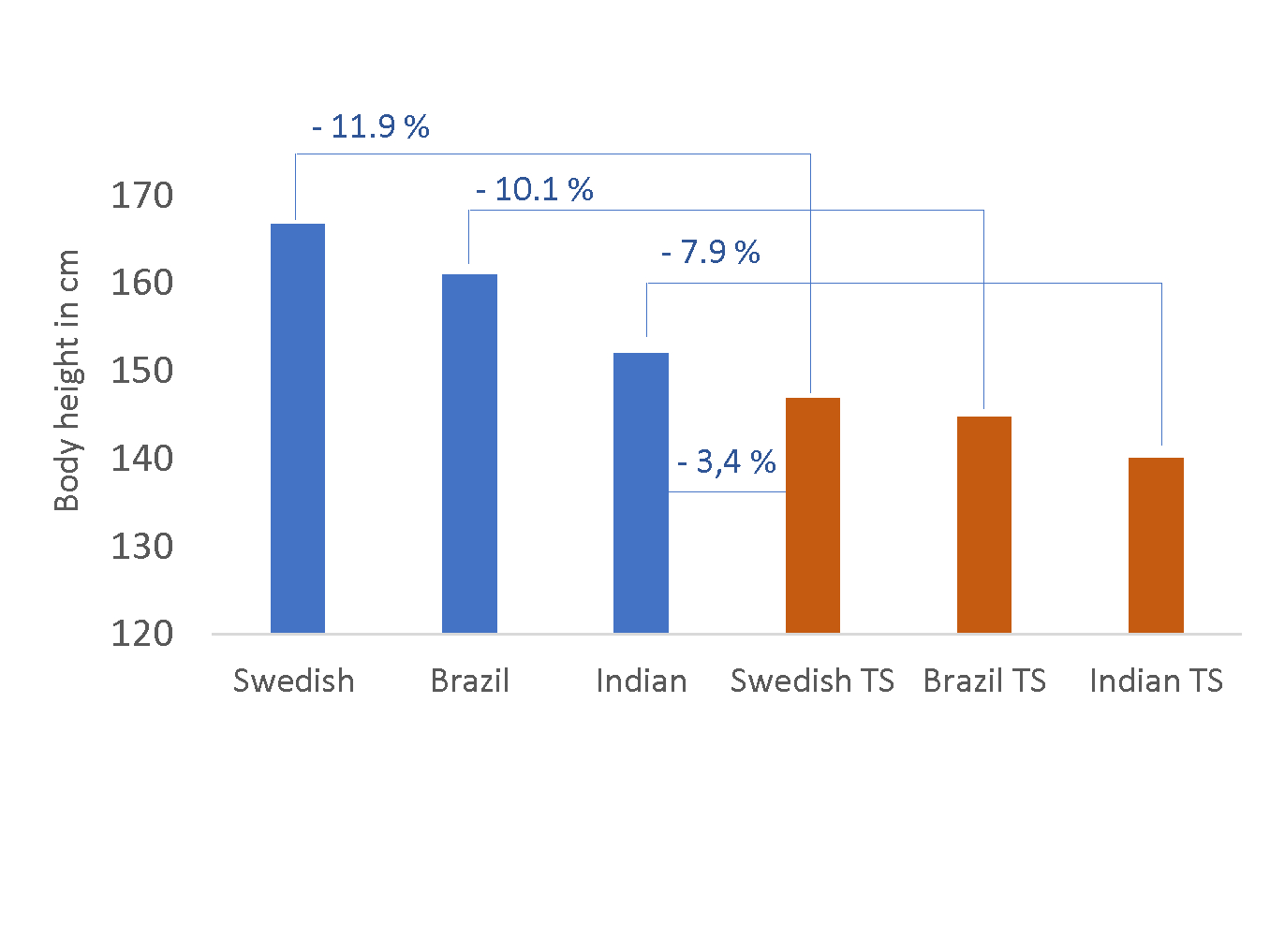
Growth of children and adolescents follows a universal non-linear pattern with three distinct growth spurts that varies both between and within populations. Common medical practice refers child growth to health and biological advantage, and considers pathology in height and in height increments (Hermanussen and Scheffler 2025) as a deviation from the universal pattern (Valdivieso-Andrade et al. 2026). Christiane Scheffler and Michael Hermanussen described the variation of normal and pathological patterns of growth with particular emphasis on the use of global growth references. Screening for body height below given cut-off lines is an inappropriate tool for detecting nutrition deficiencies and health impairment. But while global charts such as the WHO growth standards suggest universal cut-off lines, local growth charts reflect the distinct ethnic and historic diversity of human growth and enable well-founded concepts of health that align with the local cultural values. The authors exemplarily compared growth data of stunted populations and girls with Turner Syndrome with local growth references from Sweden (Rongen-Westerlaken et al. 1997), Brazil (Lemos-Marini et al. 2007), and India (Khadilkar et al. 2020) (Figure 4), and illustrate to what extent growth patterns of girls with Turner syndrome vary between different social and geographical groups.
Growth is competitive and associated with strategic local adjustments that result in long-term and substantial rearrangements in height (Hermanussen et al. 2025a; Scheffler et al. 2025). Screening for pathology in growth, thus, requires a concept of health that includes the local context.
Human growth is persistently affected and modified by various biological, environmental, and social factors. The most common anthropometric measures, i.e., height and weight, reflect the different kinds of conditions, including, for instance, genetic factors, individual lifestyle, or socio-economic aspects, in which children grow and adults change in their body mass. Moreover, some authors observed that political views may be associated, at least to some extent, with lifestyle polarization (Talaifar et al. 2025). Natalia Nowak-Szczepanska, Aleksandra Gomuła, and Slawomir Koziełstudied differences in height and weight of Polish conscripts in relation to the different regions of prevailing political views. The study sample involved nearly 10% of 19-year-old men measured during mandatory medical examinations in Poland, organized in 2023 due to annual military recruitment. Professional medical staff collected some sociodemographic data and anthropometric measurements from conscripts. Height and weight were analyzed, and body mass index (BMI, weight (kg)/height (m2)) was calculated. The regions of political views in Poland were categorized according to the last presidential election results (in 2025) for the two most common political options: more liberal (mostly western regions of Poland) and more conservative (mostly eastern regions of Poland). The data showed that Polish men from regions with more liberal political views were, on average, significantly taller than those from regions with more conservative political views. However, this association lost significance after maternal education was included as a significant factor affecting height. With respect to weight and BMI, Polish men from regions with more liberal political views were significantly heavier than those from regions with more conservative political views, regardless of parental education. The authors concluded that their study may indirectly suggest that the region of political views may be associated with long-term conditions affecting human growth and weight status, which is reflected in the differences in adult height and body mass (see Arena et al. 2023), probably in relation to distinct individual lifestyles and/or socio-economic factors.
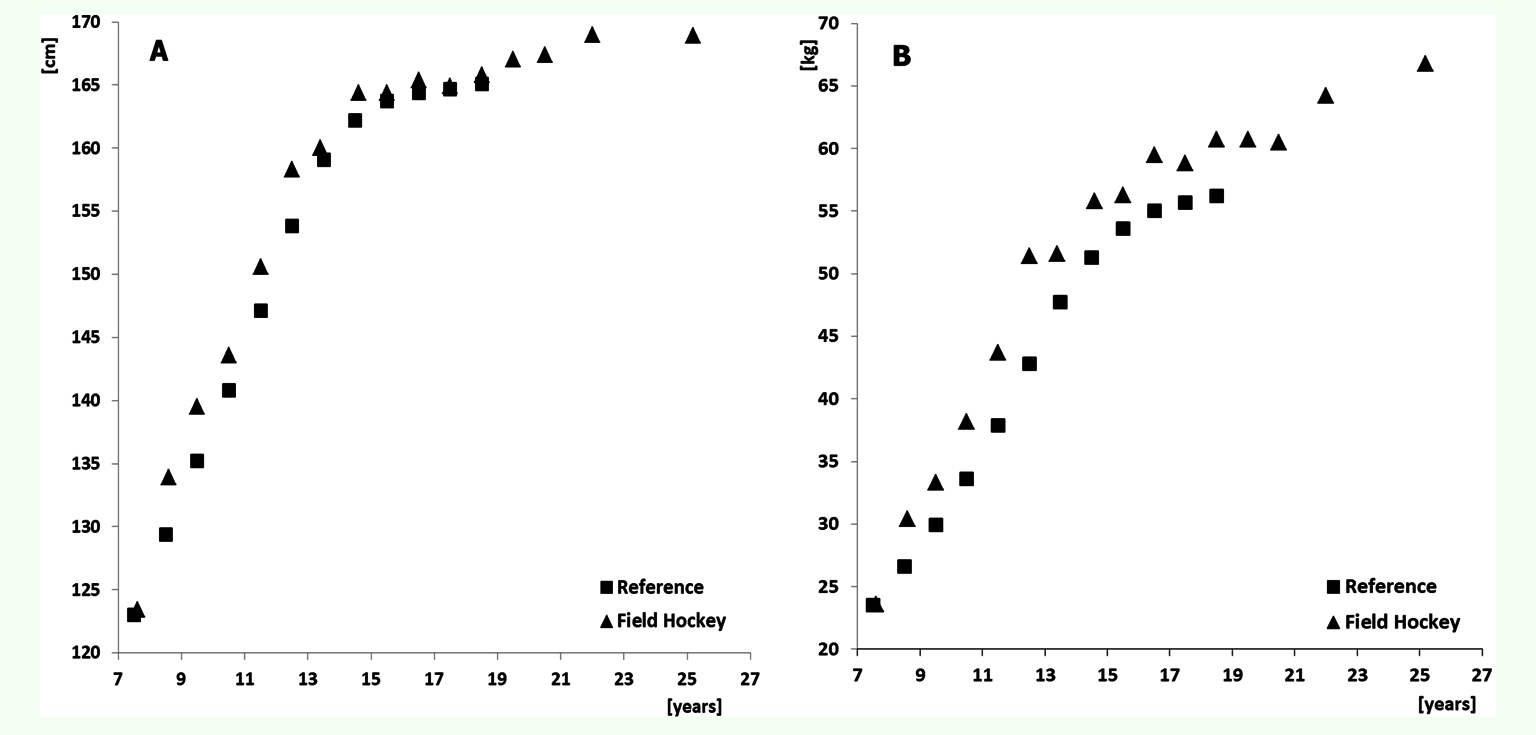
Sylwia Bartkowiak, Jan M. Konarski, and Sławomir M. Kozieł described the stature and body mass of young female field hockey players and compared these data with Polish population reference values. Although growth and biological maturation are important determinants of performance and selection in youth sport, information on the growth characteristics of young female field hockey players remains limited. The data were derived from a mixed-longitudinal sample of Polish female field hockey players aged 7–20 years (n=804). Stature and body mass were assessed according to standardized anthropometric procedures. Mean values were calculated for single-year chronological age groups and graphically compared with Polish reference data for girls (Kułaga et al. 2011). Mean stature and body mass increased with age through late adolescence (Figure 5). The players were generally taller than the Polish reference population between approximately 8 and 12 years of age, after which their mean values approximated the reference. In contrast, body mass was consistently higher than the reference values across the entire age range. At 12.5 years of age, mean stature and body mass were 158.3±7.7cm and 51.4±13.3kg, respectively. At 14.6 years, the corresponding values were 164.4±4.8cm and 55.8±8.1kg, and at 16.5 years, they were 165.4±5.9cm and 59.5±8.0kg.
Figure 5Mean heights (A) and weights (B) of Polish female field hockey players relative to reference data
The authors concluded that young female field hockey players are slightly taller and heavier than age-matched peers from the general population. The difference in stature is most pronounced before adolescence, whereas the higher body mass persists into late adolescence.
Heights and weights of youth athletes in different sports are routinely monitored and vary among populations. International sports competitions are generally conducted under standardized regulations and do not take population variability into account. As such, consideration of variation in the body size of female field hockey players may provide insights. Jan M. Konarski, Sylwia Bartkowiak, and Sławomir M. Kozieł evaluated the growth status of Polish female field hockey players relative to the heights and weights of players from different regions of the world. Data were obtained from a mixed-longitudinal sample of Polish female field hockey players aged 7–20 years (n=804). Height and body mass were measured according to standard anthropometric procedures. Mean values were calculated by single-year chronological age groups and graphically compared with the corresponding means of other countries in several regions of the world. The Dutch youth field hockey players, aged 13 to 17, tend to be taller, on average, than players in the Polish and other samples. On the other hand, mean weights of the players from different regions overlap considerably during adolescence, although several samples from India and Asia tend to be lighter. Unfortunately, data were available for only two samples of youth players from Asia, one each from Indonesia and South Korea, but not for samples of adult players. The authors concluded that among female field hockey players in the late teens and early 20s, there is considerable overlap in mean heights and weights across diverse samples, whereas among players 22 years and older, the trend shows a wide range of variation and overlap across different geographic regions. The variation in body size among samples within specific geographic regions should also be noted.
Accurate, field-based assessment of biological maturation is essential for fair selection and bio-banding in youth ice hockey, where biologically advanced players are often favored in U13–U15 categories. Widely used anthropometric methods such as the Mirwald maturity offset (Mirwald et al. 2002) and Khamis–Roche adult height prediction (Khamis and Roche 1994) are attractive to coaches but have been insufficiently validated against skeletal-age standards in elite players. Martin Musalek compared these two approaches with TW3 skeletal age in potentially talented Czech ice hockey players. Fifty-five male players (mean chronological age, 13.4±0.3 years) competing in the highest Czech league were assessed annually between 2021 and 2023. Biological maturation was estimated using the Mirwald maturity offset, the Khamis–Roche method, and TW3 skeletal age (Tanner and Cameron 2001) derived from standardized hand–wrist X-rays (RUS score). All data were evaluated by a single trained examiner. Players were classified as late, average, or early maturing, and Pearson correlations, linear regressions, and ROC analyses were used to examine agreement and diagnostic accuracy. Across U13–U15, the Khamis–Roche and Mirwald methods explained approximately 50% and 67% of the variance in TW3 skeletal age, respectively, with the lowest R² (0.50–0.52) observed in U13. Both methods showed a mean prediction error of about ±0.6 years relative to TW3. However, their sensitivity for identifying average-maturing players was modest (Khamis–Roche AUC=0.69–0.75; Mirwald AUC=0.72–0.77). The author concluded that Mirwald and Khamis–Roche show only moderate agreement with TW3 but are acceptable low-cost screening tools for PHV in elite youth ice hockey. Nevertheless, both tend to misclassify average maturing players, suggesting that a combined use of caution and interpretation is necessary when informing bio-banding and talent development decisions.
Adolescent idiopathic scoliosis (AIS) affects approximately 2–3% of adolescents and influences physical, emotional, and social well-being. Pavlína Hušková presented data on Quality of Life (QoL) in patients with adolescent idiopathic scoliosis. QoL assessment is considered an essential outcome in AIS management, yet a validated scoliosis-specific QoL instrument is currently lacking in the Czech Republic. Although the SRS-22r questionnaire is widely used internationally, no standardized Czech version is available. The author aimed to translate, culturally adapt, and validate a Czech version of the SRS-22r questionnaire to enable accurate QoL evaluation in Czech AIS patients in both clinical and research settings. A cross-sectional observational study will be conducted. Data will be obtained through anonymous self-reported questionnaires from AIS patients aged 10 years and older, with an expected sample size of over 700 participants. The validation process will include translation and back-translation, cultural adaptation, and statistical analysis. Psychometric evaluation will involve descriptive statistics, internal consistency (McDonald’s omega), test–retest reliability, intraclass correlation coefficients (ICC), convergent and divergent validity using the Czech SF-36, network analysis, and assessment of inter-item redundancy. It is anticipated that the Czech SRS-22r will demonstrate strong reliability and validity across its five domains—function/activity, pain, self-image, mental health, and satisfaction with management. High internal consistency, stable test–retest scores, and meaningful correlations with established QoL measures are expected to support the instrument's psychometric robustness. Network analysis will further clarify the structural relationships among items and provide insight into domain-level interactions. The project is expected to produce a reliable and valid Czech version of the SRS-22r questionnaire. This instrument will improve long-term monitoring of AIS patients, support clinical decision-making, and increase the comparability of Czech data with international AIS research.
Detlef Groth dealt with the direction of association in St. Nicolas House Analysis (Groth et al. 2019; Hermanussen et al. 2021; Chen et al. 2024). An important task is to discover interactions between the variables of interest. The strength of these interactions is usually determined using some type of correlation, or for non-linear relationships, using mutual information (Groth 2024; Groth 2025). The ranking of these associations in a correlation matrix serves as the basis for the St. Nicolas House Analysis, which uses this approach to discover chains of associations and combine them into variable interaction networks. In this model, variables are represented by nodes, and their interactions are captured by edges connecting them. This type of analysis focuses on primary associations and, similarly to partial correlation approaches, discards secondary associations. If two factors, A and B, are strongly associated, this means that either A influences B or B influences A, or that A and B are controlled by the same other factor, which we will call C. Measuring the strength of the association alone does not allow us to distinguish among these three cases. As the SNHA uses chains of associations to construct the network, it should be possible to deduce the direction of these interactions by uncovering the direction of a single edge/interaction, either through obvious logic or an understanding of the interaction's nature. For example, a mother's educational level can influence her children's height, but not vice versa. Using one known direction, we can use our chains to define the directions of the edges within the same chain. As well as this supervised approach based on the researcher's knowledge, we can also use topological characteristics between triads, three connected variables, and their correlations to determine edge directions.
Piotr Fedurek and colleagues provided data on mating preferences, gender equality, and cultural values from Nalmost equals79,000 individuals across 115 countries. Human mate preferences reflect adaptations to both personal values and societal structures. This study examined how individual gender equality beliefs and national-level gender inequality, individualism, and ingroup favoritism jointly shape ideal partner preferences. Participants rated the importance of six traits — physical attractiveness, kindness, resources, health, religiosity, and age — in long- and short-term mates. Multilevel linear mixed models revealed that individuals with stronger gender-equal beliefs valued kindness more and resources less, suggesting a shift toward egalitarian relational ideals. At the national level, greater gender inequality and ingroup favoritism were associated with stronger preferences for partner religiosity and resources, reflecting traditional and family-oriented mating motives. Conversely, individualism predicted greater valuation of attractiveness and kindness, traits consistent with autonomy and reciprocity in relationships. The study demonstrated that mating preferences are not universal but adaptively reflect the interplay between cultural ecology and personal ideology. Both gender equality and broader cultural values shape how people envision desirable partners, linking sexual selection processes with social change.
Thomas Schulze discussed how malleable man is in the eyes of an engineer. Humans are born with predispositions that form the framework within which human nature can flourish magnificently, but not without limitations. Accordingly, there is probably no biological discipline more political than the behavioral sciences, especially human biology/ethology and anthropology. Should anthropology therefore take the risk of becoming more political when biotechnology is in the process of redefining humanity? Biology became extremely powerful when it learned to interact with matter and manipulate or even correct physical malfunctions (genetic engineering (Schambach et al. 2024)). Recent achievements suggest that biotechnology, in conjunction with AI (Hockfield 2019), is increasingly shaping our lives, driven by the conviction that a “better human being” is possible. This brings the author closer to the idea that human history is becoming a technical narrative. However, the hypothesis is that human nature, and thus human biology itself, cannot simply be overcome with even the most sophisticated ‘anthropotechnics’ unless human nature itself undergoes a massive restructuring (reconfiguration) and reprogramming at all, if possible. The author therefore asked how far we have come in redefining, or even overcoming, our biological limits, and whether our human nature is already at stake. Overcoming humanity, a desirable goal? Finally, he asked, does anthropology agree with a purely biotechnological vision, and does it already have a say, or does it need to speak up more clearly when humans take evolution into their own hands?
References
Arena, R./Pronk, N. P./Woodard, C. (2023). Physical Inactivity and Obesity in the United States: At the Intersection of Politics, Socioeconomics, Race, and Culture. Current Problems in Cardiology 48 (12), 102007. https://doi.org/10.1016/j.cpcardiol.2023.102007.
Bogin, B. (2021). Social-Economic-Political-Emotional (SEPE) factors regulate human growth. Human Biology and Public Health 1 (1). https://doi.org/10.52905/hbph.v1.10.
Buřilová, M./Daďová, K./Nováková, P./Vařeková, J. Trénink vizuomotorické koordinace u předškolních dětí. In: Konference ZTV 2023.
Chen, S./Moris, S./Groth, D. (2024). Improving ramification detection of St. Nicolas House Analysis. Human Biology and Public Health 4 (1). https://doi.org/10.52905/hbph2024.1.81.
Cooklin, A. R./Rowe, H. J./Fisher, J. R. W. (2012). Paid parental leave supports breastfeeding and mother-infant relationship: a prospective investigation of maternal postpartum employment. Australian and New Zealand Journal of Public Health 36 (3), 249–256. https://doi.org/10.1111/j.1753-6405.2012.00846.x.
Engsner, M./Ciba, I./Aydin, B./Stenlid, R./Söderhäll, J./Bergsten, P./Forslund, A. (2025). Evaluation of BMI Growth Charts for Children Living with Severe Obesity. Childhood Obesity 21 (7), 629–639. https://doi.org/10.1089/chi.2024.0423.
Flynn, J. T./Kaelber, D. C./Baker-Smith, C. M./Blowey, D./Carroll, A. E./Daniels, S. R./Ferranti, S. D. de/Dionne, J. M./Falkner, B./Flinn, S. K./Gidding, S. S./Goodwin, C./Leu, M. G./Powers, M. E./Rea, C./Samuels, J./Simasek, M./Thaker, V. V./Urbina, E. M. (2017). Clinical Practice Guideline for Screening and Management of High Blood Pressure in Children and Adolescents. Pediatrics 140 (3). https://doi.org/10.1542/peds.2017-1904.
Groth, D. (2025). Tutorial: Statistics for Human Biologists - Terminology and Univariate Statistics. Human Biology and Public Health 5 (2). https://doi.org/10.52905/hbph2025.2.113.
Groth, D./Scheffler, C./Hermanussen, M. (2019). Body height in stunted Indonesian children depends directly on parental education and not via a nutrition mediated pathway - Evidence from tracing association chains by St. Nicolas House Analysis. Anthropologischer Anzeiger 76 (5), 445–451. https://doi.org/10.1127/anthranz/2019/1027.
Henderson, S./Sugden, D./Barnett, A. L. (2007). Movement Assessment Battery for Children. 2nd ed. London, Pearson.
Hermanussen, M./Aßmann, C./Groth, D. (2021). Chain Reversion for Detecting Associations in Interacting Variables-St. Nicolas House Analysis. International Journal of Environmental Research and Public Health 18 (4). https://doi.org/10.3390/ijerph18041741.
Hermanussen, M./Aßmann, C./Scheffler, C. (2025a). Avoiding "Too Tall" and "Too Short": The Effect of the Community on the Regulation of Body Height. American Journal of Human Biology 37 (6), e70085. https://doi.org/10.1002/ajhb.70085.
Hermanussen, M./Scheffler, C. (2025). Reference values for short term height velocity – a brief practical guide. Human Biology and Public Health 5 (2). https://doi.org/10.52905/hbph2025.2.110.
Hermanussen, M./Scheffler, C./Fritsch, J./Fedurek, P./Nieczuja-Dwojacka, J./Kaczmarek, M./Kirchengast, S./Hagmann, D./Bühler, B./Górka, K./Bartkowiak, S./Koca Özer, B./Köksal Babacan, E./Baran, K./Musalek, M./Satake, T./Peiris, R./Hirohara, T./Hattori, K./Nowak-Szczepanska, N./Apanasewicz-Grzegorczyk, A./Gomula, A./Koziel, S. (2025b). Human growth and development across time and space. Human Biology and Public Health 5 (1). https://doi.org/10.52905/hbph2025.1.101.
Hockfield, S. (2019). The Age of Living Machines. How Biology Will Build the Next Technology Revolution. W. W. Norton & Company Incorporated.
Jirásek, J. (1992). Orientační test školní zralosti. Bratislava.
Khadilkar, V. V./Karguppikar, M. B./Ekbote, V. H./Khadilkar, A. V. (2020). Turner Syndrome Growth Charts: A Western India Experience. Indian Journal of Endocrinology and Metabolism 24 (4), 333–337. https://doi.org/10.4103/ijem.IJEM_123_20.
Khamis, H. J./Roche, A. F. (1994). Predicting adult stature without using skeletal age: the Khamis-Roche method. Pediatrics 94 (4 Pt 1), 504–507.
Kułaga, Z./Litwin, M./Tkaczyk, M./Palczewska, I./Zajączkowska, M./Zwolińska, D./Krynicki, T./Wasilewska, A./Moczulska, A./Morawiec-Knysak, A./Barwicka, K./Grajda, A./Gurzkowska, B./Napieralska, E./Pan, H. (2011). Polish 2010 growth references for school-aged children and adolescents. European Journal of Pediatrics 170 (5), 599–609. https://doi.org/10.1007/s00431-010-1329-x.
Lemos-Marini, S. H. V. de/Morcillo, A. M./Baptista, M. T. M./Guerra, G./Maciel-Guerra, A. T. (2007). Spontaneous final height in Turner's syndrome in Brazil. Journal of Pediatric Endocrinology and Metabolism 20 (11), 1207–1214. https://doi.org/10.1515/jpem.2007.20.11.1207.
Meedya, S./Fahy, K./Kable, A. (2010). Factors that positively influence breastfeeding duration to 6 months: a literature review. Women and Birth: Journal of the Australian College of Midwives 23 (4), 135–145. https://doi.org/10.1016/j.wombi.2010.02.002.
Mirkovic, K. R./Perrine, C. G./Scanlon, K. S. (2016). Paid Maternity Leave and Breastfeeding Outcomes. Birth 43 (3), 233–239. https://doi.org/10.1111/birt.12230.
Mirwald, R. L./Baxter-Jones, A. D. G./Bailey, D. A./Beunen, G. P. (2002). An assessment of maturity from anthropometric measurements. Medicine and Science in Sports and Exercise 34 (4), 689–694. https://doi.org/10.1097/00005768-200204000-00020.
Myers, S./Page, A. E./Emmott, E. H. (2021). The differential role of practical and emotional support in infant feeding experience in the UK. Philosophical Transactions of the Royal Society of London. Series B, Biological Sciences 376 (1827), 20200034. https://doi.org/10.1098/rstb.2020.0034.
Rongen-Westerlaken, C./Corel, L./van den Broeck, J./Massa, G./Karlberg, J./Albertsson-Wikland, K./Naeraa, R. W./Wit, J. M. (1997). Reference values for height, height velocity and weight in Turner's syndrome. Swedish Study Group for GH treatment. Acta Paediatrica 86 (9), 937–942. https://doi.org/10.1111/j.1651-2227.1997.tb15174.x.
Ruff, C. B./Holt, B. M./Niskanen, M./Sladék, V./Berner, M./Garofalo, E./Garvin, H. M./Hora, M./Maijanen, H./Niinimäki, S./Salo, K./Schuplerová, E./Tompkins, D. (2012). Stature and body mass estimation from skeletal remains in the European Holocene. American Journal of Physical Anthropology 148 (4), 601–617. https://doi.org/10.1002/ajpa.22087.
Schambach, A./Buchholz, C. J./Torres-Ruiz, R./Cichutek, K./Morgan, M./Trapani, I./Büning, H. (2024). A new age of precision gene therapy. Lancet 403 (10426), 568–582. https://doi.org/10.1016/S0140-6736(23)01952-9.
Scheffler, C./Groth, D./Hermanussen, M. (2025). Political Liberation, Hope, and Social Competition Are the Motor of Secular Trends in Height. American Journal of Human Biology 37 (7), e70095. https://doi.org/10.1002/ajhb.70095.
Scheffler, C./Hermanussen, M. (2025). Human growth regulation is dominated by the socio-cultural exposome. Human Biology and Public Health 5 (2). https://doi.org/10.52905/hbph2025.2.119.
Sulis, S./Falbová, D./Hozáková, A./Vorobeľová, L. (2025). Association between frequency of energy drink consumption and bone tissue quality in Slovak young adults. Human Biology and Public Health 5 (1). https://doi.org/10.52905/hbph2025.1.91.
Sulis, S./Falbová, D./Hozáková, A./Vorobeľová, L. (2026). Association between alcohol consumption, smoking and bone tissue quality in Slovak young adults assessed by radial quantitative ultrasound. Human Biology and Public Health. https://doi.org/10.52905/hbph2026.112.
Talaifar, S./Jordan, D./Gosling, S. D./Harari, G. M. (2025). Lifestyle polarization on a college campus: Do liberals and conservatives behave differently in everyday life? Journal of Personality and Social Psychology 129 (1), 152–180. https://doi.org/10.1037/pspp0000545.
Tanner, J. M./Cameron, N. (2001). Assessment of skeletal maturity and prediction of adult height (TW3 method). 3rd ed. London, Saunders.
Valdivieso-Andrade, E./Hermanussen, M./Scheffler, C. (2026). Growth patterns: Pathology vs. Normal variation. Growth Hormone and IGF Research 83, 101682. https://doi.org/10.1016/j.ghir.2026.101682.
Wan, M./Simonin, E. M./Johnson, M. M./Zhang, X./Lin, X./Gao, P./Patel, C. J./Yousuf, A./Snyder, M. P./Hong, X./Wang, X./Sampath, V./Nadeau, K. C. (2025). Exposomics: a review of methodologies, applications, and future directions in molecular medicine. EMBO Molecular Medicine 17 (4), 599–608. https://doi.org/10.1038/s44321-025-00191-w.
 ✉
✉